Pepperdine Joins African Leadership in Kenya for Historic Justice Summit and New Global Partnership
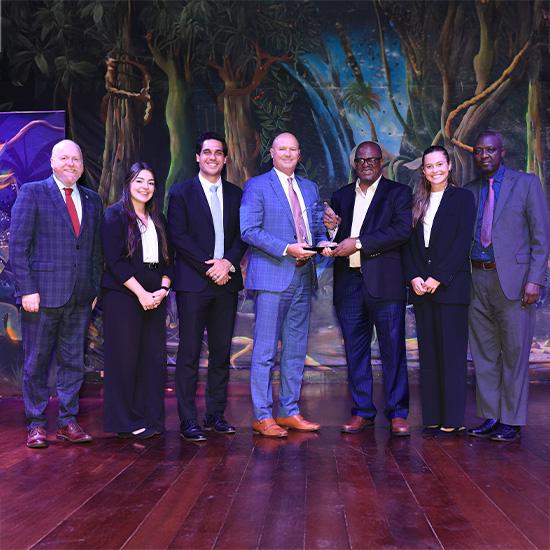
Chief justices representing 15 African nations, traditional community elders, and executive leadership from Pepperdine University gathered in Kenya for a historic convening this June. The third annual Africa Chief Justices' Alternative Dispute Resolution Forum (ACJADRF) Summit centered on the theme: "A Justice System that Serves, Listens, and Resolves: Advancing ADR and Alternative Justice Systems for Peace, Inclusion, and Prosperity in Africa."
The landmark gathering demonstrated a holistic vision for African justice sector reform, spanning from community-based restorative justice to commercial dispute resolution designed to support the African Continental Free Trade Area.
From Grassroots Engagement to Continental Commerce
The summit progressed across two distinct stages that transitioned from everyday community needs to macroeconomic trade. The first day of the summit began at the University of Embu with a gathering of African chief justices and senior judicial leaders with traditional elders, civil society actors, and local justice practitioners. Central to these proceedings was the opening of an Alternative Justice System (AJS) center in Embu where local residents who have disputes can bring them to local, traditional leaders for resolution. The agreed-upon resolution can then be enforced by the traditional justice system. This effort culminated in the launch of the Embu County AJS Action Plan, providing a scalable model for translating national alternative justice policies into effective county-level execution.
In her opening welcoming remarks, host chief justice of Kenya Lady Justice Martha K. Koome captured the profound necessity of leaning into alternative dispute resolution.
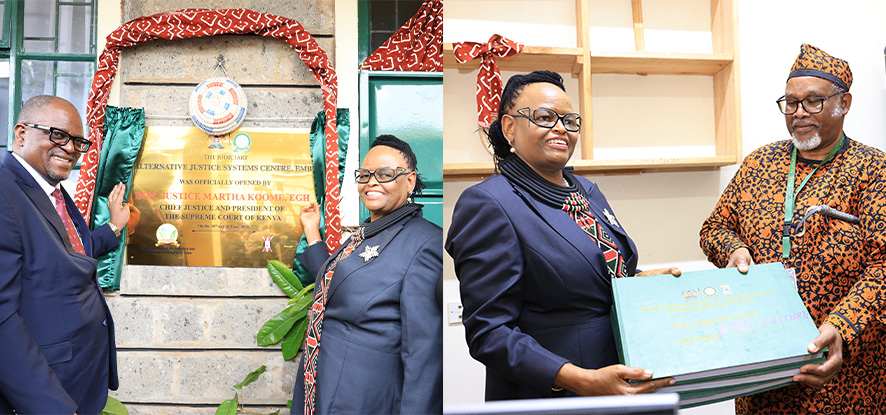 Chief Justice of Kenya Lady Justice Martha K. Koome
"While our constitutions and statutes all promise justice for all, the lived experiences of many Africans tell a more complex story. . . . In Kenya, only 17 percent can afford to go to formal courts and pursue justice in the formal justice sector. A whopping 64 percent access justice through alternative means," shared Koome.
Koome also emphasized that reliance on traditional leaders, customary systems, and community elders is not a failure of formal courts, but an opportunity to reimagine access to justice. The extensive role played by those outside the government, she explained, challenges leaders to broaden their understanding of justice and to create pathways where disputes can be solved quickly, fairly, affordably, and in ways that strengthen rather than fracture communities.
Calling on judicial leaders to execute the summit theme with purpose, Koome added, "We seek justice systems that serve rather than intimidate. We seek justice systems that listen rather than dictate. And we seek justice systems that resolve disputes rather than merely process them."
The following day in Nairobi focused on commercial dispute resolution and how ADR can positively impact economics at the continent-wide level by freeing up billions of dollars long frozen in the slow litigation process.
Delivering the keynote address, his Excellency Dr. William Samoei Ruto, president of the Republic of Kenya, reframed the entire concept of "alternative" dispute resolution, noting that dialogue and reconciliation are Africa's primary legal inheritance.
"In Africa, the resolution of disputes through dialogue is not the alternative. It has never been; it is the original and the only justice system," explained Ruto. "We did not import alternative dispute resolution. We authored it and then, for a time, forgot that we were the authors. This summit is our act of remembering."
He challenged the gathered jurists to end the paradox of shipping commercial disputes overseas, asking, "Why does African justice, like African produce, so often earn its premium somewhere else? Let us resolve African disputes on African soil by African jurists under African institutions. That is not protectionism. That is sovereignty."
Pledging executive action, Ruto further committed to advocating for judicial resourcing as a continental priority, asserting, "Funding our judiciaries is not an act of generosity; it is a strategic investment in stability and growth."
Sessions chaired by chief justices from Zambia, Uganda, Malawi, and Namibia emphasized how although each country has its own specific needs and context, a commitment to finding common ways to further alternative dispute resolution should be shared by all jurisdictions on the continent.
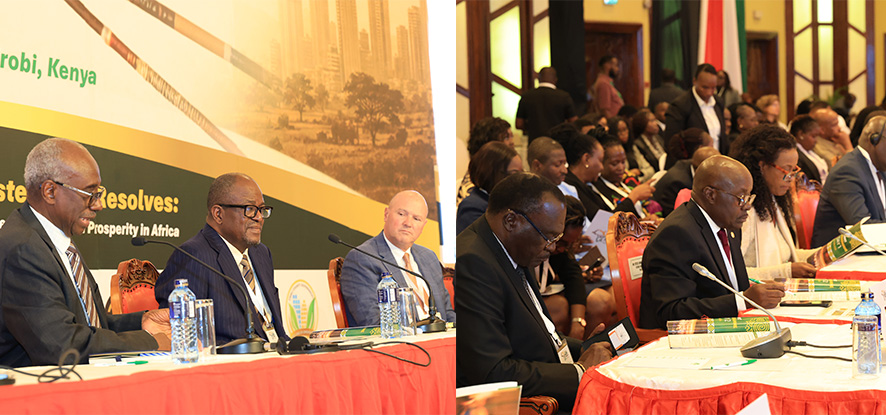 Danny DeWalt (middle right) at the ACJADRF
In his address to the chief justices and other officials, Danny DeWalt, senior vice president for global impact and chief of staff of Pepperdine University, praised the visionary leadership driving the continental movement.
"I want to commend the chief justices of this forum for their personal conviction and their leadership in promoting and establishing ADR across the continent. . . . We are inspired by the judicial leadership that you have shown in getting ADR to catch fire in Africa, really unlike anywhere else in the world," said DeWalt.
DeWalt also underscored the importance of adaptive judicial leadership and comprehensive, nationwide stakeholder training to ensure consistency and long-term sustainability, stating: "Every stakeholder in the system of ADR needs to be trained. . . . Judiciaries in countries where ADR is thriving have found creative ways to work within constitutional constraints to establish practice directives or persuade their parliament to move forward," explained DeWalt. "Countrywide training is crucial so that you can travel anywhere and have the same procedural framework in place that allows ADR, both commercial and criminal, to thrive."
Expanding Sudreau’s Footprint Across Africa
A key highlight of Pepperdine's engagement during the summit was the formalization of Kenya as an official country partner with Pepperdine Caruso School of Law’s Sudreau Global Justice Institute with the signing of a memorandum of understanding, reflecting a shared commitment to expanding access to justice. Building on Pepperdine’s long-standing role as the official partner, trainer, and capacity builder for the Africa Chief Justices' ADR Forum, this new partnership expands the institute's growing footprint of hands-on judicial capacity building, court-annexed mediation training, and legal reform initiatives across the African continent.
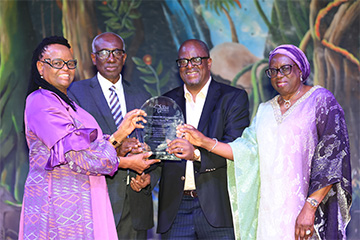 Kenya establishes a formal partnership with Pepperdine
Kenya joins Rwanda, Uganda, and Malawi as the fourth African nation to establish a formal partnership with Pepperdine University, further strengthening the growing judicial partnerships across the continent.
The 2026–28 Judicial Alignment Roadmap
The Nairobi summit concluded with the unanimous adoption of the Judicial Alignment Roadmap 2026–28, a comprehensive framework centered on institutionalizing trust, enhancing judicial capacity, modernizing legal education, ensuring tax certainty, and advancing continental diplomacy. To guide this ambitious agenda, the summit officially inaugurated the ACJADRF
Council of Elders, featuring distinguished jurists led by chair of the Advisory Council Hon. Justice Hassan Bubacar Jallow, chief justice of the Gambia, and Hon. Lady Justice Meaza Ashenafi, former chief justice of Ethiopia, serving as vice chair. Additionally delegates formally endorsed the Confidential Judicial Reflection Note and Nairobi Communiqué to guide future African Union implementation.
Visit the Sudreau Global Justice website for more on Pepperdine's enduring dedication to global justice, court efficiency, and human flourishing across Africa.
SUBSCRIBE TO THE WAVELENGTH
Pepperdine Newsroom's official newsletter for campus updates and top news.
Subscribe