Pepperdine President Jim Gash and Classic Learning Test Founder Jeremy Wayne Tate Explore Why a Moral Education Matters in National Review Op-ed
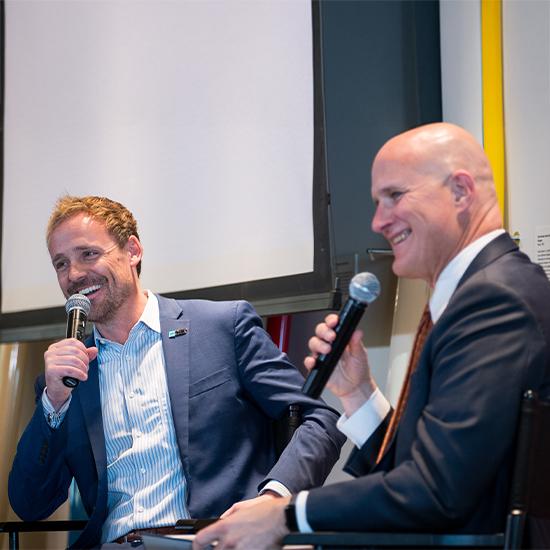
In a recent National Review op-ed, Pepperdine President Jim Gash (JD '93) and Jeremy Wayne Tate, founder and CEO of the Classic Learning Test, challenge a mantra of modern educators: "We teach students how to think, not what to think." The authors argue that while this sentiment is widely accepted and often applauded, it is fundamentally flawed.
Gash and Tate contend that education is never truly neutral. They argue that when educators claim to be completely neutral, they often inadvertently allow unexamined ideologies to influence their classrooms, leading to a loss of moral integrity. Drawing on C.S. Lewis’s The Abolition of Man, they warn that focusing solely on intellectual training without a moral foundation risks creating "men without chests"—graduates equipped with knowledge and technical skill but lacking the moral grounding necessary to use those abilities wisely and responsibly.
The provocative headline, “We Should Teach Students What to Think,” sparked debate in the publication’s comment section and on social media about the ultimate purpose—the telos—of education. Platforms such as the Religious Freedom Institute agreed with Gash and Tate’s perspective of providing students with an openly virtue-centered education, penning in an X comment:
“An education that avoids teaching students what to think would forgo many of the fundamental principles that most educators take for granted and risks creating graduates who are gifted thinkers but who have none of the moral training necessary to use their gifts for good.”
For Gash and Tate, education goes beyond cultivating capable thinkers; they support an educational model that forms the whole person. "The mission of education should be to create good citizens: young men and women of wisdom and virtue who love the good, true, and beautiful."
To explore Gash and Tate’s full argument and their vision for the future of American education, read the complete article in the National Review.
SUBSCRIBE TO THE WAVELENGTH
Pepperdine Newsroom's official newsletter for campus updates and top news.
Subscribe