Pepperdine University Welcomes Inaugural Class of the Middle East Policy Studies Program
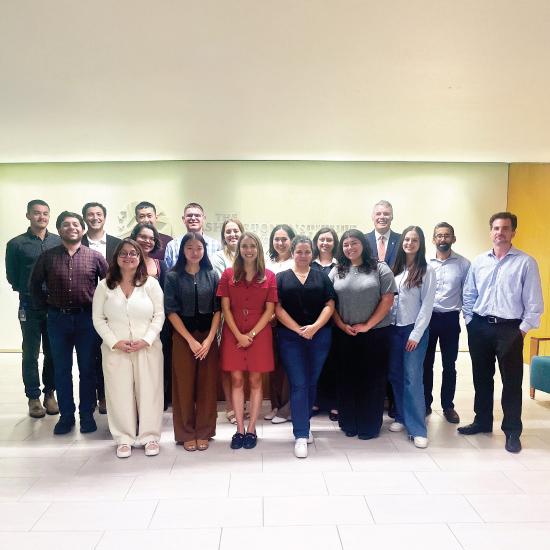
Classes begin today for the inaugural class of students enrolled in Pepperdine’s Master of Middle East Policy Studies (MMEPS), a new School of Public Policy program hosted by Pepperdine University’s Washington, DC, in partnership with The Washington Institute for Near East Policy.
Developed through a unique partnership between the Pepperdine School of Public Policy (SPP) and The Washington Institute for Near East Policy (The Washington Institute), the graduate program equips future policy leaders with a comprehensive understanding of the Middle East’s historical, political, religious, and cultural dynamics—alongside the tools to translate analysis into action.
“In one sense, the launch of the new MA in Middle East Policy Studies marks the fulfillment of two important strategic goals for the School of Public Policy: 1) expanding our academic footprint in the nation’s capital, and 2) growing the number of degree programs we offer,” said Pete Peterson (MPP ’07), dean of the School of Public Policy. “In a deeper sense, it demonstrates the importance of our longstanding commitment to viewpoint diversity in academia, and how we can apply that to such a vital policy-related discipline.”
During New Student Orientation last week, Dean Peterson emphasized trust by encouraging students to build relationships across differences and to be “bridge-builders” who turn expertise into implementation.
The inaugural class reflects a wide range of academic and professional backgrounds, including degrees in homeland security, corporate security, politics, Arabic studies, strategic intelligence, marketing and communications, art history and English, and business economics. Students bring experience from national security think tanks, diplomatic embassies, journalism and media organizations, and policy institutes; others arrive directly from undergraduate study. Two cohort members are affiliated with The Washington Institute, and three are international students.
“I’m thrilled to be a member of the inaugural cohort for Pepperdine’s Middle East Policy Studies program in Washington, DC,” said Claire Lee (’23). “You can really feel the intentionality and support from the faculty, and I’m eager to learn from professors who bring so much real-world experience to the classroom.”
Grounded in Pepperdine’s dedication to academic excellence, principled leadership, and global engagement, the curriculum centers on three pillars: Understanding the Middle East, Understanding US Policy Toward the Region, and Understanding the Professional Toolkit. Students develop practical skills—from how intelligence informs policy decisions to researching and writing policy memos for real-world decision-making. Courses are taught by scholar-practitioners who have held significant roles in government and policy.
Distinguished Faculty include Robert Kaufman, the Robert and Katheryn Dockson Professor of Public Policy at SPP; Martin Kramer, the Walter P. Stern Fellow at The Washington Institute, former director of the Moshe Dayan Center at Tel Aviv University, and founding president of Shalem College in Jerusalem; Dennis Ross, the Davidson Distinguished Fellow and counselor at The Washington Institute; Barbara Stevens, a former executive leader at the Central Intelligence Agency; and Dana Stroul, the Kassen Family Senior Fellow and director of research at The Washington Institute and former deputy assistant secretary of defense for the Middle East at the US Department of Defense.
Together, these faculty and the program’s applied focus prepare students for careers in diplomacy, intelligence, academia, journalism, and other fields engaged in the region’s most pressing challenges.
SUBSCRIBE TO THE WAVELENGTH
Pepperdine Newsroom's official newsletter for campus updates and top news.
Subscribe