Pepperdine's Center for Digital Learning Takes Online Education to New Level

As technology continues to evolve and transform the educational landscape, Pepperdine has proactively developed virtual and hybrid learning opportunities with a clear goal in mind: to create exceptional educational experiences for all students, whether online or in person.
To meet the growing demand for stronger digital infrastructure to support today's virtual classrooms, the University established a permanent and innovative force for academic transformation—the Center for Digital Learning (CDL). Housed in the Office of the Provost, the center now serves as the University’s central hub for instructional design, with a specialized team of 17 designers dedicated to reimagining how students can learn across Pepperdine’s schools and programs.
The center's creation was driven by the foresight and persistence of key leadership, including Farzin Madjidi, dean of the Graduate School of Education and Psychology, who championed in-house instructional design services, and Dave Smith, interim dean of the Graziadio Business School, whose visionary leadership was instrumental in establishing the CDL.
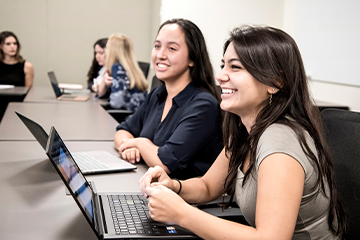 Students engaing in online courses
The center operates today as a full-service collaborative partner across many corners of the University. According to Jennifer Miyake-Trapp, the center’s assistant provost, “The Center for Digital Learning advances Pepperdine's mission and commitment to academic excellence in the digital landscape. Through a robust instructional design infrastructure, we amplify faculty expertise to co-create rigorous learning experiences that foster a deeply connected community and prepare our students for global impact.”
The CDL acts as the architectural team behind Pepperdine’s newest educational endeavors. Its portfolio includes supporting the launch of the Speech Language Pathology program at the College of Health Science; redesigning the Doctor of Education and online Master of Arts in Teaching programs at the Graduate School of Education and Psychology; and preparing for the new online Master of Laws (LLM) in International Commercial Arbitration program at the Straus Institute for Dispute Resolution while upgrading the existing curriculum at the Caruso School of Law.
Elias Saade (MS '20, EdD '25), the center's manager, emphasized how the team elevates Pepperdine's academic standards by offering localized instructional design tailored to each program’s specific context. "We don't believe in a one-size-fits-all approach to digital learning," Saade explained. "Our team works side-by-side with faculty to apply best practices in instructional design with their deep subject expertise. By keeping the student experience at the heart of everything we do, we're able to co-create rigorous, engaging courses that feel authentically Pepperdine."
The CDL is also focused on critical "wraparound services," such as ensuring course materials meet current accessibility requirements, building robust assessments, and developing rich multimedia content.
The Straus Institute’s new online International Commercial Arbitration LLM program offers a clear example of how CDL is reshaping Pepperdine’s academic reach. According to David Dowling (MDR ’09), Judge Danny Weinstein Managing Director of the Straus Institute, the center is stepping in as the in-house partner that will “house everything for us” and “help us build the online LLM classes." The center's team is leading the design and production of course content, ensuring that students around the world can engage with Straus’s renowned arbitration faculty in a format that reflects Pepperdine’s brand, quality, and pedagogical standards.
“The partnership between ourselves and an on-campus entity like CDL has enabled us to put together a product that students can easily access, and one I know we'll be very proud of,” shared Dowling.
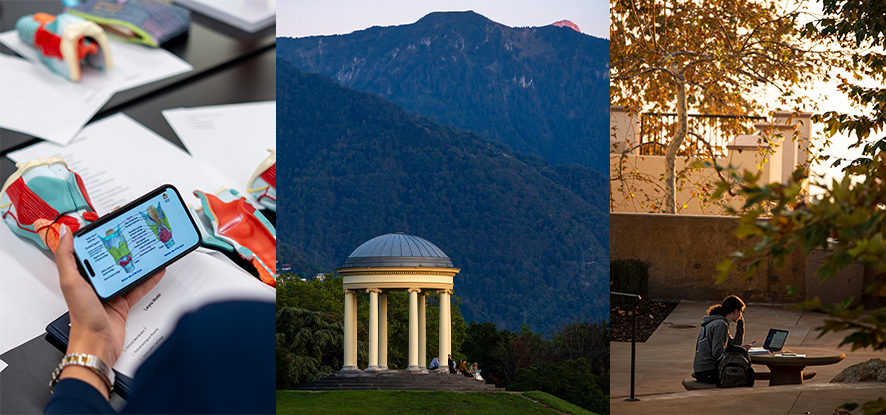 The CDL enables students to study and learn from anywhere in the world
The center's role is also central to Straus’s broader access mission. By supporting an online LLM structure, it allows students to seek an advanced degree without having to uproot families or leave full-time jobs. It is particularly valuable for the many international students who seek LLMs, making high-level legal education attainable for practitioners in regions affected by war, political instability, or limited embassy access. Dowling noted that the center is “critical for us” as Straus pivots to models that allow students to access its courses and continue their education from their home countries. Additionally, the program’s hybrid design further illustrates how CDL-enabled models can combine global flexibility with meaningful in-person engagement.
Another example of CDL's impact is the reimagining of the online Master of Arts in Teaching program, empowering faculty to transform curriculum into dynamic virtual experiences. "The center has enabled us to deliver relevant course content and program learning objectives in a virtual format," said Reyna García Ramos, professor of education and chair of the Department of Education and Pedagogy at GSEP. "Partnering with their innovative team allowed us to reimagine assignments originally designed for the in-person experience, creating new opportunities for our teacher candidates to read, observe, and visualize classroom work."
According to Leah Fullman, dean of the School of Speech-Language Pathology at Pepperdine University’s College of Health Science, the center has been a vital partner in developing SLP graduate courses, providing essential expertise in instructional design and accessibility. Emphasizing the collaborative nature of this partnership, she noted that launching the online program required "us to think deeply about how to translate a highly interactive, clinical program into a digital learning environment without compromising academic rigor, clinical skills, or student engagement."
One of the center's greatest contributions was fostering a sense of community among geographically dispersed students. Since speech-language pathology is built on communication and interpersonal relationships, the center helped design courses that encourage active participation and regular interaction between students and faculty. "The result is a program built not only on strong academic content but also on evidence-based practices for effective digital learning," she said.
The center further challenged the school to view online education as its own distinct environment rather than a substitute for face-to-face instruction. This vision ensures students are active participants rather than passive consumers. "By leveraging the strengths of online education, the center helped us build a program where students can develop professional knowledge, clinical reasoning, and a supportive community," Fullman concluded. "That vision has become a defining characteristic of the program and has contributed significantly to its early success."
At its core, the CDL fulfills a vital mission—empowering faculty to creatively reimagine instruction and enrich academic programs university-wide. "By integrating essential design support, the center expands educational access and ensures a polished, flexible learning experience where online students can thrive," explains Lila McDowell Carlsen, vice provost and professor of Hispanic studies at Seaver College. "With CDL's support, faculty can keep the focus on what matters most: student learning and success."
SUBSCRIBE TO THE WAVELENGTH
Pepperdine Newsroom's official newsletter for campus updates and top news.
Subscribe