Religion Professor Ron Highfield Examines the Purpose of the Christian University with New Book
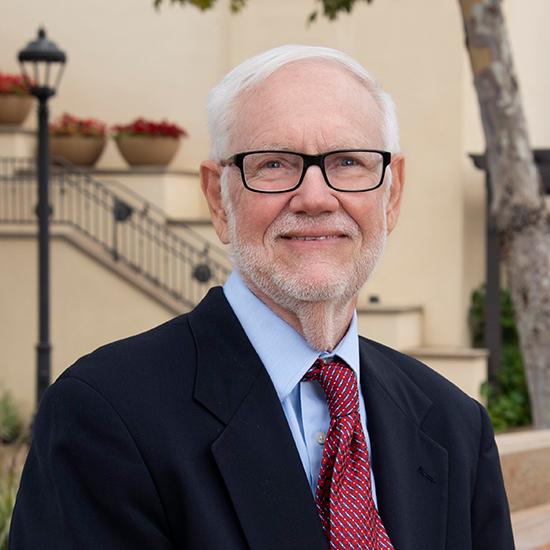
Shedding light on the value of a Christian worldview in higher education, Ron Highfield, professor of religion at Seaver College, has authored a new book, The Christian University and the Academic Establishment. Informed by four decades of experience as a religion professor at Pepperdine University, Highfield’s research examines the history and theory of higher education and develops a defense of Christian education's mission of stewarding biblical truth.
“Among other reasons, I wrote this book to define with greater precision the basic academic and spiritual values that should animate the Christian university,” says Highfield, “believing that greater clarity about the history and current embodiments of these principles will facilitate discussion of how best to carry out the Christian mission in higher education.”
In conversation about his book, Highfield referenced Benedictine monk Anselm of Canterbury’s words: “I believe to understand” (credo ut intelligam), explaining that Christian faith serves as the foundation for fruitful inquiry. In times of ever-changing visions of what is true, good, wise, and useful, Highfield asserts that the Christian university must stand firm in its mission with integrity and confidence. He adds that an environment that defends moral tradition and the wisdom of the past, complements, rather than impedes, the discovery of new ideas.
“Real freedom is the God-given capacity to know the truth, do the good, and praise the beautiful,” Highfield wrote in his book. “Because Christian universities believe in knowledge, truth, and virtue, they encourage professors to teach and research under the guidance of their Christian faith.”
“There’s no such thing as pure neutrality,” Highfield adds. "All institutions operate with some fundamental beliefs, but the advantage of Christian universities,” he maintains, “is that they are transparent about their commitment to biblical principles and communicate those convictions openly.”
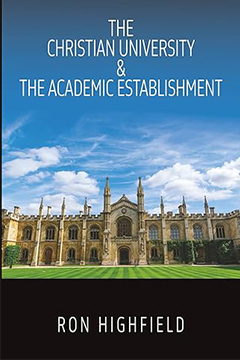
American higher education rests on the foundation of Christianity, Highfield adds. For example, most Ivy League schools were founded as Protestant colleges to provide higher education for ministers; yet between 1850 and 1880 influence from the University of Berlin brought a sea change—and led to the advent of the modern research university.
Soon, new principles helmed the American academy, including academic freedom, faculty governance, and tenure. Highfield analyzes each of these in turn, along with the emergence of the secular post-modern university, and explores how they interact with the mission and identity of the Christian university.
According to Highfield, many Christian universities founded in the 20th century were conceived as alternatives to secular institutions, considered to be countercultural, and in many respects remain as such.
Christian institutions now find themselves in a unique position, he observes. While committed to the advanced learning and research that defines a contemporary university, Highfield maintains that Christian universities should remain extensions of the church’s witness, as “sanctuaries for truth, justice, freedom, and a shared human identity grounded in Christian faith and love.”
Within his book Highfield also explores how academic freedom, a topic of increasing interest among those at the helm of institutions of higher education, interacts with the mission of the Christian university. Because academic freedom operates under the purview of the university, Highfield contends that final responsibility for defining its scope and limits responsibility falls to the university’s Board of Regents and administration.
“In the current environment, assertions of academic freedom are often used as wedges to undermine and teach in ways that contradict or distort the basic values of the Christian mission,” Highfield laments. “Academic freedom is not unlimited in any university. But Christian universities in particular must carefully define academic freedom in a way that advances rather than impedes the academic and religious missions of the school.”
Highfield’s academic and theological contributions include the authorship of more than 10 books focused on how to live faithfully in alignment with Christian doctrine amid a modern culture that often promotes conflicting values. Through these publications and his extensive research, he has developed a well-articulated expertise on the future of faith-based learning and how Christians colleges can thoughtfully enact their missions.
“We believe in being Christian—we believe there’s truth there,” says Highfield. “It’s a foundation for life, for our research programs, and for our understanding of the world. This unity dignifies and gives purpose to all members of the university community—faculty, administrators, staff, and students.”
Learn more about Highfield's book on an episode of The PeppTalk Podcast.
SUBSCRIBE TO THE WAVELENGTH
Pepperdine Newsroom's official newsletter for campus updates and top news.
Subscribe