Pepperdine Sudreau Global Justice Institute Advances Legal Reform with Historic Malawi Prison Project
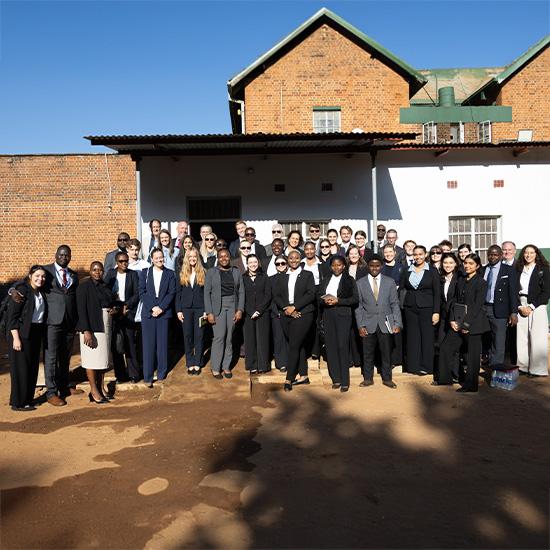
Over a transformative four-day initiative this summer, the Pepperdine Sudreau Global Justice Institute hosted its second Malawi Prison Project at Zomba Prison. The project brought together 20 law students, including 15 from Pepperdine Caruso School of Law, alongside international legal professionals to support efforts addressing severe trial delays, systemic case backlogs, and critical prison overcapacity across the nation.
Zomba Prison is the largest prison in Malawi. However, the prison is severely overcrowded—initially constructed to house approximately 800 inmates and currently holding roughly 2,000 individuals. Among those served by the Sudreau team, clients had spent an average of two years and two months on remand awaiting trial, with the longest continuous pretrial detention stretching to more than 15 years.
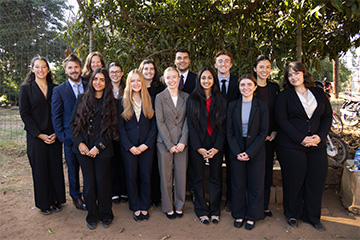 Caruso law student participants
The four-day trip mobilized a high-level legal coalition structured into 10 distinct working teams, alongside a dedicated Secretariat Team managing file tracking, case logistics, and status updates. Each team paired a US or Ugandan attorney, a Malawian attorney, a US law student, and a Malawian law student. The initiative drew support from key judicial leaders, including the Honorable Chief Justice of Malawi, Rizine Robert Mzikamanda.
Impact at Zomba Prison and Beyond
Building on the success of the inaugural Spring Break Malawi Prison Project—which established the first formal plea agreement in the nation's history—this latest effort significantly increased the initiative's impact. The team quadrupled previous resolution metrics by serving 33 clients, resolving 28 cases, and securing the immediate release of eight individuals who had already served the duration of their sentence.
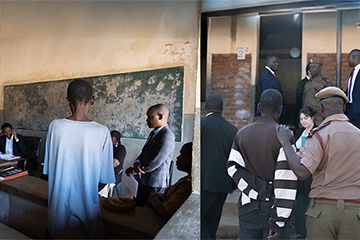 Inside Zomba Prison and a court case
Additionally, the impact of the trip resonated far beyond the walls of the prison—reaching the official pages of American jurisprudence. US Sixth Circuit Court of Appeals Judge Chad A. Readler, who also participated in the trip, authored a published federal appellate opinion (United States v. Rishad Williams) drafted during his time in Malawi. In the piece, Readler explicitly referenced the delegation's work alongside Mzikamanda, permanently recording the cross-cultural justice initiative and citing the Chief Justice of Malawi within the US Federal Reporter.
Student Perspectives
Before participating in the Zomba Prison Project, several Caruso law students completed legal internships directly with the Supreme Court of Malawi. For these students, the combination of high-level judicial clerkships and grassroots prison defense provided a profound look at the global reach of legal advocacy.
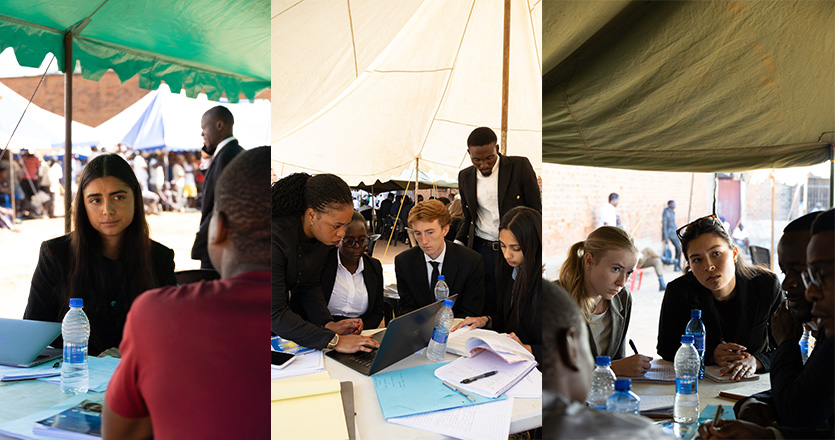 Caruso law students engaging with clients and partnering with local attorneys
For Kayla Greenwood ('24), the trip served as a return to where her aspirations for a legal career began. Greenwood first felt called to pursue law after observing a prison justice project in Uganda during her undergraduate studies at Pepperdine.
"The prison project opened up my eyes to how impactful a law degree can really be," Greenwood reflected. "We get so stuck in our American bubble and have no idea about the issues going on across the world. When you see how backlogged all the cases are, real human lives are waiting months and years before they get any legal help."
For Kailua-Kona native Tia Lurbiecki, working within Malawi's judicial system gave her a clearer vision of how she can serve her home state of Hawaii in the future.
"When you move away, you're gaining knowledge and experiences and wisdom that you can come back and pour back into your community," said Lurbiecki. "Traveling across the world to experience a new culture and judicial system will only broaden my perspective, and being able to bring that back to my hometown is something I think will benefit not just me, but my community."
Ishika Patel ('25), who was inspired to enter public service through high school mentoring programs, found that the trip reinforced the importance of relational advocacy.
"I'm here today because of a human connection," Patel shared, recalling advice from a high school mentor to be “more than just a lawyer.” She continued, "My goal is to find people along the way who change my mindset, and then hopefully I can do that for somebody else."
For Kharra Schwabe, whose grandfather was an attorney, working directly alongside Malawian Supreme Court justices and defense teams provided invaluable early-career experience.
"It felt like a once-in-a-lifetime opportunity," said Schwabe. "When you're able to learn the law, you can help people, even in little ways. . . I think it'll be really impactful to use what we're learning to help people."
Learn more about the Sudreau Global Justice Institute's initiatives on the Caruso School of Law website.
SUBSCRIBE TO THE WAVELENGTH
Pepperdine Newsroom's official newsletter for campus updates and top news.
Subscribe