
Institute for Diplomacy, Security, and Innovation
The Institute for Diplomacy, Security, and Innovation at Pepperdine University was established to bridge the gap between intellectual and policy ideas and decision making in a rapidly evolving global order. Under the leadership of Kiron Skinner, Pepperdine's inaugural Taube Family Chair of International Relations and Politics, the institute achieves this goal through guiding priorities organized around the concepts of a new geography and American grand strategy that are specifically tailored to 21st-century domestic and geopolitical realities. The activities of the institute include convenings such as seminars, conferences, and summits. The institute also publishes research-based and opinion essays in its Journal of Diplomacy, Security, and Innovation. With the launch of this institute, Pepperdine continues to serve as a global leader in higher education, deepening its expertise and scholarship in foreign policy and national security.
A Strategic Response to a Shifting World
On 9/11, the United States suffered the deadliest terrorist attack in its history, an event that reshaped American foreign policy for generations to come. In the years that followed, the Global War on Terror consumed national focus, leaving little room to craft a broader grand strategy that addressed rising global powers, shifting alliances, and emerging challenges across the Transatlantic region, the Middle East, the Indo-Pacific, the African continent, and the Western Hemisphere. As a result, US statesmen, scholars, and policymakers now find themselves in search of a strategic framework on par with Cold War-era containment.
The military conflicts in Europe and the Middle East, the bellicosity of China and
Russia, the rising power and independence of nations of the Global South, and fractures
in the Western alliance have made designing a new grand strategy for the United States
and the world a more urgent matter. A key element is the rapid reappraisal of the
geopolitical landscape, which is producing a new geography. Defined in terms of looking
at the globe through novel zones of economic, political, digital, transportation,
and energy freedom, the new geography has the potential both to connect nations within
a region and nations from very distant regions in ways that disable their dependence
on malign actors of all sorts, including authoritarian regimes. These emerging zones
of freedom in turn contribute to a reduction in population disruption, illegal migration,
and terrorism while enhancing religious liberty and human flourishing.
Foundations of a New Grand Strategy
- Convening Urgent Global Conversations
- Interdisciplinary Scholarship and Training
- Mobilizing American Institutions for Strategic Diplomacy
- An Incubator for Values-Based Innovation

Convening Urgent Global Conversations
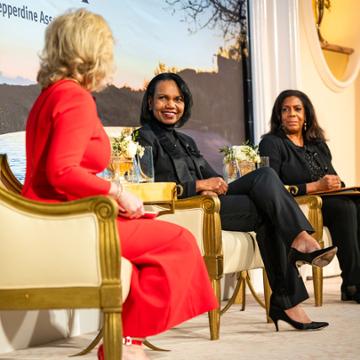
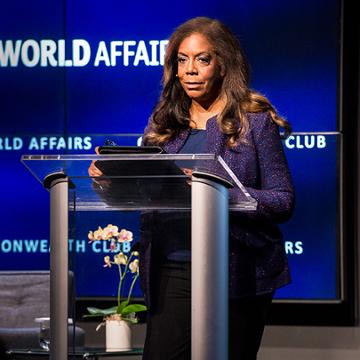
When Kiron Skinner joined the Pepperdine faculty in the fall of 2022, she immediately began organizing global conversations on urgent matters. During her first semester of teaching, she had six graduate students join her in Hungary for a transatlantic dialogue on national security and emerging technologies. She then held a cybersecurity and national security conference among thought leaders from Indo-Pacific Quad nations (Australia, India, Japan, and US) at the Malibu campus. At the start of her second year, Professor Skinner hosted her inaugural transatlantic security conference at the university's Château d'Hauteville campus in Vevey, Switzerland. A year later, Professor Skinner held another Vevey conference. It focused on the global challenges posed by China as well as crises in the Middle East. It is now an annual conference that will address transatlantic themes.
Convenings that Professor Skinner has hosted in Vevey, Malibu, and Washington, DC, have brought together statesmen, scholars, and policymakers across several continents who seek a Middle East marked by an expansion of democracy, peace, and prosperity in the wake of the October 7, 2023, deadly incursion into Israel. These Future of Israel convenings will continue as a signature activity of the Institute for Diplomacy, Security, and Innovation. Conferences on the future of the Arab world, North Africa, Europe, and the Western Hemisphere will be regularly held as well.
The conferences, workshops, and seminars of the Institute for Diplomacy, Security, and Innovation are designed to facilitate new faculty research on national security and foreign policy issues and suggest pathways for shaping policy discussions in the capitals of the world. Through this work, Pepperdine seeks to become a leading voice in international engagements.
Interdisciplinary Scholarship and Training
Engaging with external partners and Pepperdine faculty from across disciplines—including the social sciences, humanities, public policy, computer science, law, and business—whose research interests intersect, the Institute for Diplomacy, Security, and Innovation cultivates a vibrant collaborative environment that provides opportunities for faculty to engage in interdisciplinary research and students to participate in advanced mentored research. IDSI also offers specialized training modules in national security and emerging technologies for staff members throughout the federal government, including Capitol Hill, the military, as well as the diplomatic and intelligence communities.
Mobilizing American Institutions for Strategic Diplomacy
Foreign policy and innovation are largely shaped by the dynamic interaction of the White House, State Department, Congress, the private sector, civil society, faith communities, and the media. Representatives of these American institutions are joining the institute's scholars to ensure that faith and freedom are guiding lights in new diplomacy, security, and innovation strategies.
An Incubator for Values-Based Innovation
The technology revolution touches every aspect of society, from currency to healthcare, war to education, the functioning of government to the delivery of services. Although often overlooked, faith and freedom are a critical part of the intellectual and policy infrastructure for the entire innovation space. Through research, writing, and an annual innovation summit, the institute incubates ideas and actions that show how and why values matter in technology-driven societies.
Emerging technologies, politics, and conflict is another line of effort. The institute supports the study of the continuing impact of emerging 21st century technologies such as unmanned systems, social media, and cyber tools on great power conflict. Throughout the past 30 years, the explosion of privately financed digital and industrial technology has created novel dynamics among nations. The barriers to entry and exit into international conflict are rapidly declining, along with the radical increase in ability for both states and individuals to communicate in mass.
Seminar Series
American Political Thought
The varieties of political thought are the enduring feature of the United States. From the nation's founding until the present day, US citizens and their leaders have been locked into a dialogue about the nature and purpose of government, what the consent of the governed means, the proper balance of power among the three branches of government as well as between the federal government and the states, social responsibility at home and abroad, race and rights, among other issues. Partisans declare that America's founding is conservative or liberal, or even progressive, but the reality is decidedly complex, with elements of numerous political ideas being reflected throughout the American political system. In this seminar series, scholars present their research on core strands of American political thought. Statesmen are invited to explain the role of ideas in shaping decision making and policy outcomes in the political arena.

The Future of the Rules-Based International Order
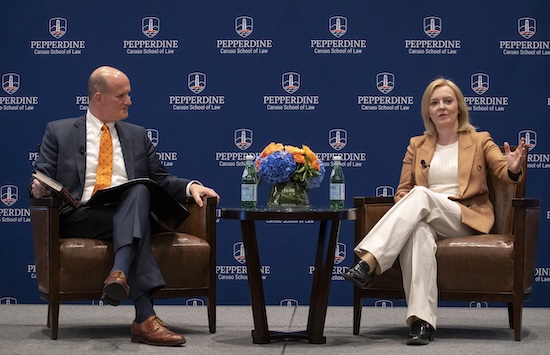
Intense debate and divergent views surround the future of rules-based international order. A system put in place by the United States and other nations in the wake of two world wars in the early twentieth century appears to be astray. An order where nations big and small followed rules—with few exceptions—to resolve conflicts rather than maximalist wars was much needed after two world wars. Since its inception in mid-20th century the order facilitated unprecedented economic growth and prosperity, improved quality of life, democracy, and individual rights. However, in the early decades of the 21st century it appears to have lost steam. Why? The diagnosis and prescriptions for the malaise of liberal order run the gamut of skeptics questioning its original intent and efficacy to the unquestioning fervor of those clutching to the glory of yesteryears. A sober discourse is warranted. This seminar provides a platform for statesmen and scholars to think through the history of the liberal international order in suggesting whether and how it may be refashioned for a different 21st century.
Student Diplomacy and Dialogue
Pepperdine students are empowered and encouraged to engage deeply with global policy issues through student-run organizations and initiatives. By fostering open dialogue, principled debate, and real-world application, these programs cultivate the next generation of leaders committed to service, integrity, and global impact.
Grand Strategy Lab
The Grand Strategy Lab is an academic and policy hub for students, faculty, policymakers, and statesmen engaged in matters of war, peace, cooperation, and discord among state and non-state actors. It fosters cutting-edge international security research and symposia, guided by applied history and policy analysis.
Alexander Hamilton Society
The Alexander Hamilton Society is a student-run organization that is a part of a larger organization of students, faculty, national policy leaders, and captains of finance and industry. The society seeks to develop the next generation of American leaders, initially through discussions and forums on campus, then to intellectual and professional development that will launch Hamiltonians into careers of public service, academia, and business.
John Quincy Adams Society
The Pepperdine University Chapter of the John Quincy Adams Society is a student-run organization dedicated to promoting a foreign policy of realism and restraint, rooted in the principles of America's Founding Fathers. The society aims to engage students in meaningful discussions about foreign policy and national security, fostering intellectual development and preparing them for careers in public service, academia, and other fields. Our chapter is part of a broader national movement that connects students, faculty, and policy leaders to advocate for thoughtful and principled American engagement in the world.
Academic Engagement
Through partnerships with federal agencies, the institute connects students and faculty with opportunities to engage directly in policy research and practice. These collaborations strengthen our academic mission while contributing to national conversations on governance and public service.

Institute News


Journal of Diplomacy, Security, and Innovation
The Journal of Diplomacy, Security, and Innovation brings specificity to the new geography concept by publishing essays that examine new and emerging zones of economic, political, digital, transportation, and energy freedom that can link peace-loving nations in a broad and durable community that reduces population disruption, illegal migration, and terrorism while enhancing religious liberty and human flourishing. Essays will be drawn from papers presented at IDSI's conferences. The editorial board will also commission essays.
Publisher and Editor
Kiron K. Skinner
Associate Editors
Russell Berman
James Carafano
Derek Harvey
Institute Leadership
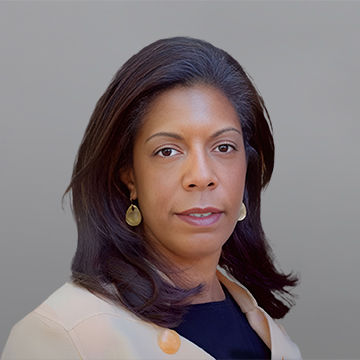
Kiron Skinner, the inaugural Taube Family Chair of International Relations and Politics at the Pepperdine School of Public Policy, is a renowned scholar, diplomat, cybersecurity expert, and former State Department and Defense Department official. Skinner has served as the Taube Professor since 2022 and provided her expert insights on international relations, US foreign policy, political strategy, and cyber security both in the classroom and with external audiences. Through her course, How to Run the World, Skinner encourages students' development as multidimensional people and reinforces, through her personal and professional experiences in government, their understanding of how to effectively engage with governments and leaders.